Showing posts with label Android. Show all posts

Tuesday, 11 November 2014

Sony SmartWatch 3 is now in stock in the United States


Sony SmartWatch 3 is now in stock at the Google Play store in the United States The wearable device is listed as ready to leave the warehouse in 1-2 business days.


The $249.99 Sony SmartWatch 3 first appeared in the Play store in the middle of last month. Only the black color model is available for the time being.

Microsoft Lumia 535 goes official with 5" qHD display


The first Windows Phone smartphone to carry the Microsoft name is now a fact. The already leaked, entry-level Microsoft Lumia 535 will being rolling out to key markets this month in single or dual-SIM variants. Microsoft Lumia 535 features Qualcomm Snapdragon 200 chipset with 1.2GHz quad-core CPU. There's 1GB of RAM and 8GB of built-in memory, which can be further expanded via a microSD card slot. The display of the handset is a 5" IPS unit with qHD resolution(960 x 540 pixels), enhanced sunlight readability, and Corning Gorilla Glass 3. A duo of 5MP cameras grace the front and the back of the Lumia 535. Combined with the 5" screen, they give the device a "5x5x5 smartphone package" moniker. The physical measures of Microsoft Lumia 535 are 140.2 x 72.4 x 8.8mm, while its weight tips the scale at 146 grams. A 1,905mAh battery powers the smartphone. The handset boots Windows Phone 8.1 with Lumia Denim. Naturally, it offers free access to the usual plethora of Microsoft services for free. Microsoft Lumia 535 will be available in a plethora of characterful colors on its exchangeable back cover. It will cost around €110 before any taxes and subsidies.

Sunday, 9 November 2014

HERE Maps for Android gets Lollipop support via an update


The HERE Maps beta for Android, which launched a couple of weeks ago has just received its first update. The new release brings support for the latest Android 5.0 Lollipop, while also coming with some bug fixes and performance tweaks.


The update ensures that the downloaded voice files are kept safe and sound. The fix means that you will have to redownload any non-English voices but they won’t accidentally disappear anymore if you’re using a ‘cache cleaner’ app on your smartphone.

Digital generation: Have childrens toys had their chips?


WITH the demand for hi-tech presents sure to hit new heights this year, should we be worried that playtime has gone digital? Not necessarily, as Rachel Carlyle reports

Saturday, 8 November 2014

'Football Leather' Moto X (2014) now out at Verizon


Today, Verizon has officially unveiled a new color version for the Moto X (2014). It's got a fancy name, too: "Football Leather". It's a reddish hue, meant to make you think about (American) football when you look at it, since it's so close to the color of an actual football. The new version of the Moto X is exclusive to Verizon, so if you'd like to get it for use on another carrier you're out of luck. If you don't have anything against Verizon, on the other hand, you can buy the Football Leather Moto X for $119.99 (after a $50 mail-in rebate), if you sign a new two-year contract with the carrier. That's $20 more expensive than what the black model currently goes for, so it looks like you'll need to pay extra for that football look. Internally, though, there's absolutely no difference between these handsets. So inside the Moto X with Football Leather you'll still find a Qualcomm Snapdragon 801 chipset, a 2.5 GHz quad-core CPU, an Adreno 330 GPU, as well as 2GB of RAM. It has a 5.2-inch 1080p touchscreen, a 13 MP rear camera with dual-LED flash, a 2 MP front camera, and a 2,300 mAh battery. It runs Android 4.4..


Motorola Moto X (2014) 5.0 Lollipop update now seeding to testers


Over the past two years or so Motorola turned regular firmware updates into one its top priorities and has been making sure that all its current smartphones run the latest available version of Android. And by the looks of it, things won't change with the release of 5.0 Lollipop. Not only has Motorola committed to updating its lineup, but it appears that it will be the first company to do so. In fact the Moto X (2014) that have signed up to participate in the company's soak testing are already receiving a beta 5.0 Lollipop build as an update. That's not quite the finalized ROM that will be distributed, but barring any major bugs that might pop up during the testing, that one shouldn't be too far away. We don't have an exact changelog for the update, just yet but Material Design UI has been confirmed as well as the battery life boost by Project Volta. We don't know if Motorola will be adding any touches of its own to the release, but the company usually likes to stick close to the vanilla user experience. Hopefully, the final release won't take too long to come and put the last pieces of the...


Friday, 31 October 2014

Microsoft enters wearable tech race with cross-platform fitness tracker

Microsoft will compete against tech giants Apple, Google and Samsung, who have all released fitness bands with similar features.

TORONTO – Microsoft has officially entered the wearable tech race with the unveiling of “Microsoft Band,” a fitness tracker designed to integrate with users’ smartphones.
The bracelet-style device monitors user’s daily fitness goals – from steps taken, to calories burned – and includes a heart rate monitor. Band can also synch with the user’s smartwatch to display notifications.
The device has a UV sensor to help users decide if they need sunscreen or not.
Microsoft will compete against tech giants Apple, Google and Samsung, who have all released fitness bands with similar features.
The official announcement comes a week after Forbes published a report speculating Microsoft was gearing up to launch the device ahead of the holiday season.

Oppo N3 and R5 hands-on: First look

Introduction

Oppo's Singapore event is now under way and we were off to a great show - the star of the show took the stage just minutes after the start. The successor to the Oppo N1 is called Oppo N3 and retains the rotating camera module on the top, while adding a few nice extras on top. The Oppo N3 sports a 5.5" display, meaning it's much smaller than the 5.9" Oppo N1.
With 16MP on a 1/2.3" sensor and f/2.2 aperture, the Oppo N3 should be a potent cameraphone. The lens on the camera is also Schneider Kreuznach certified, while a nice touch to the rotating module is the added motor, which allows it to auto-rotate.
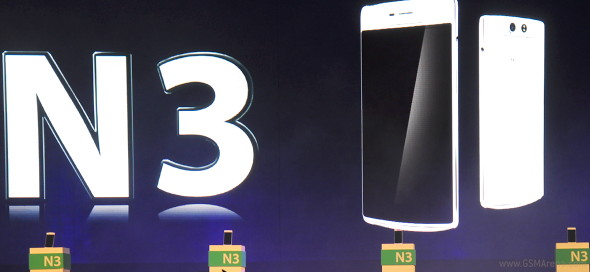
Each pixel is 1.34 microns which puts it above the Samsung Galaxy S5 and Sony's Xperia series, so in theory the Oppo N3 should be able to do better in low-light conditions. What's more interesting about the rotating Oppo N3 camera is its ability to move by itself, a whole 206 degrees. Oppo has named the module Motorized camera. Once the camera locks onto a subject it can track it by itself. Panoramas have also gotten better, now offering an automatic mode and a maximum resolution of 64MP.

Oppo N3 at a glance:

  • Dimensions: 161.2 x 77 x 9.9mm; 192g
  • Display: 5.5" TFT touchscreen, 1,080 x 1,920 resolution; around 401ppi; Gorilla Glass 3
  • Chipset: Snapdragon 801 MSM8974AA chipset: quad-core Krait 400 @2.3GHz; Adreno 330 GPU; 2GB RAM
  • OS: ColorOS 2.0 based on Android 4.4 KitKat
  • Camera: 16MP Motorized camera with 4K@24fps video recording; 206-degree rotation, f/2.2 aperture, infrared and Bluetooth remote control, RAW support
  • Storage: 32GB built-in, microSD card
  • Connectivity: LTE, Wi-Fi a/b/g/n/ac, Bluetooth 4.0, A-GPS + GLONASS; microUSB 2.0
  • Battery: 3,000mAh, VOOC rapid charging
  • Misc: Fingerprint scanner on the back
     
The camera suite of the N3 has been upgraded and is now called Ultra image 2.0. It has slow shutter, ultra macro mode, after focus, RAW support and manual control. The beautify mode is here once again.
The Oppo N3 has the the same pixel density as the Apple iPhone 6 Plus - 401ppi. There's a Snapdragon 801 chipset with a quad-core Krait 400 processor and 2GB of RAM inside to keep things going smoothly. The Oppo N3 comes with ColorOS 2.0, which is based on Android 4.4 KitKat, no word yet on a CyanogenMod variant.
Built inside a stainless steel frame the Oppo N3 looks very sleek and premium. On the back it now has a fingerprint scanner, which can also be used to encrypt images.
The Oppo N3 comes with a breathing light under its display. Oppo calls it Notification Light 2.0. The O-Click remote is back as well, also in 2.0 form. It will help users to find the Oppo N3 and more.
The Oppo N3 supports VOOC rapid charging for its 3,000mAh battery. It can get to 75% battery from 30 minutes of charge. Oppo says you can get 2 hours of call time from 5 minutes of charging. There's a new mini VOOC charger specifically for the Oppo N3.
The price of the Oppo N3 at $649.
And now the Oppo R5 - praised by the company as the thinnest smartphone in the world at just 4.85mm. It packs a 5.2" 1080p AMOLED of 423 ppi, 13MP camera on the back and a 5MP on the front.

Android grows as iOS and Windows Phone decline in Q3

According to the latest Kantar WorldPanel report on mobile operating system market share, Android continues to take the lead marking a slight growth. Its main rivals, iOS and Windows Phone, declined slightly in their respective market share numbers.

In both Europe (EU5) and the US, Android leads its competitors with a market share of 73.9% and 61.8%, respectively. In Europe, Apple takes 15.4% of the market, while Microsoft with Windows Phone manages 9.2%. Interestingly, iOS marks a decline in the US of 3.3 percent points to 32.6% compared to Q2. Windows Phone's presence is also shrinking and is now 4.3% from 4.6%
As far as manufacturers go, LG and Motorola have been doing great in the US and Kantar sees them in a better position to fight with Samsung and Apple than ever. LG is counting on the G3, while Motorola is betting on the Moto X.
In China, Samsung is also feeling pressure from uprising manufacturers such as Xiaomi. It now boasts 30.3% market share whereas Samsung's market share fell to 18.4%. Interestingly, 16% of all smartphones sold in China were with a screen size of 5.5" or larger.

Motorola Nexus 6 hands-on: First look

Introduction

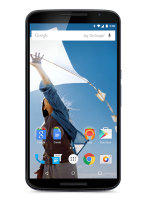
Motorola may have already divorced Google, but the relationship still bears fruit and most recently we've seen the Nexus 6. The first Nexus phablet and the first Nexus by Motorola closely follows the Moto X (2014) design language and brings many of the same software features, though now they are a native part of the OS.
Nexus 6 hands-on Nexus 6 hands-on Nexus 6 hands-on
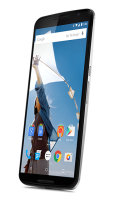
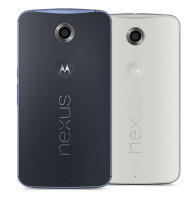
Motorola Nexus 6 official images
The Nexus line is meant to lead the way to better smartphone design, but in this generation it plays a bit of a follower by jumping on the already speeding phablet bandwagon. Even so it's the introduction of Android 5.0 Lollipop and for the first time the vanilla OS has a few extra features against its skinned contemporaries.

Motorola Nexus 6 at a glance:

  • Dimensions: 159.3 x 83 x 10.1mm, 184g
  • Display: 5.96" AMOLED touchscreen, 1,440 x 2,560 resolution (493ppi); Gorilla Glass 3
  • Chipset: Snapdragon 805 chipset: quad-core Krait 450 @ 2.7GHz; Adreno 420 GPU; 3GB RAM
  • OS: Android 5.0 Lollipop
  • Camera: 13MP main camera with ring dual-LED flash; Optical Image stabilization
  • Video camera: 2160p@30fps video
  • Front camera: 2MP
  • Storage: 32GB/64GB built-in
  • Connectivity: LTE Cat. 6 (300Mbps), Wi-Fi a/b/g/n/ac, Bluetooth 4.1, A-GPS + GLONASS; microUSB 2.0 with SlimPort functionality
  • Battery: 3,220mAh, Motorola Turbo Charger
  • Misc: Front-facing stereo speakers, Qi wireless charging
The Motorola Nexus 6 is strictly a phablet - we know the definition has shifted over the years, but in the end a phablet is a device that's pocketable but best used with two hands.
And standing at a whopping 159.3mm tall and 83mm wide, the Nexus 6 is a challenge to use with one hand. Most of that size is due to the screen, bezels are minimal and the 5.96" screen is left to dominate the front. It's a tack-sharp AMOLED of QHD resolution (493ppi).
A Snapdragon 805 chipset is the best showground for Android 5.0 Lollipop and for future versions to come. After all, part of the Nexus charm is that you stay up to date with Android's latest design and features. And there are plenty of features to be had, borrowed from Motorola's own-branded family. The always-on voice commands, the Ambient display and Turbo Charging.

Tuesday, 28 October 2014

Samsung Galaxy A5 price revealed before launch

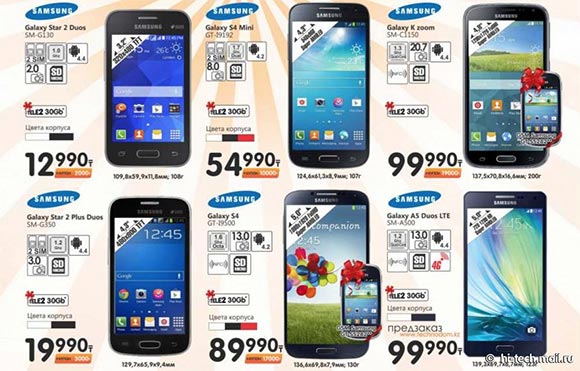
The Samsung Galaxy A5 is one of the three upcoming smartphones from the company to feature a metal-clad frame and its price has been prematurely revealed by Kazakhstan carrier "Technodom". According to a leaked listing, the Galaxy A5 Duos LTE, as it's dual-SIM version is going to be called, costs about $552 or €435 (KZT 99,990).

This sounds a bit pricey for a smartphone with a 5" Super AMOLED display of 720p resolution and a Qualcomm Snapdragon 400 chipset with a quad-core 1.2GHz Cortex-A7 CPU and 1GB of RAM. There's a microSD card slot on board as well as NFC and the phone will run Android 4.4.4 KitKat out of the box.
Still, the metal frame brings the phone up a notch in terms of look and feel. As for dimensions, the Galaxy A5 measures 139.9 x 69.7 x 6.7mm and weighs 123 grams. At the back, there's a 13MP snapper with LED flash while a 5MP camera sits at the front.
We've seen the Galaxy A5 and Galaxy A3 on video and in a ton of live photos, which show the phone from every angle.
There's no information when Samsung is going to officially announce the Galaxy A5, Galaxy A3 and Galaxy A7 smartphones. With all the leaks we have on track until now, we guess it's not going to be long until the phones become official.

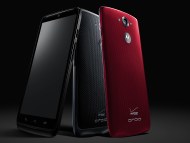
Motorola Droid Turbo hands-on: First look

Introduction

This is the Motorola Droid Turbo - Motorola's strongest claim at the high-end throne yet. Built around the strong foundation of the Moto X (2014), Nexus 6 and Motorola's previous Droids it pools together a premium build, pure Android with exclusive features and impressive battery life.

Motorola Droid Turbo
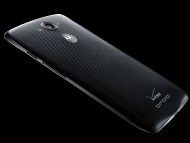
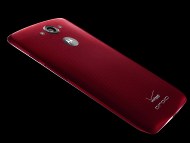
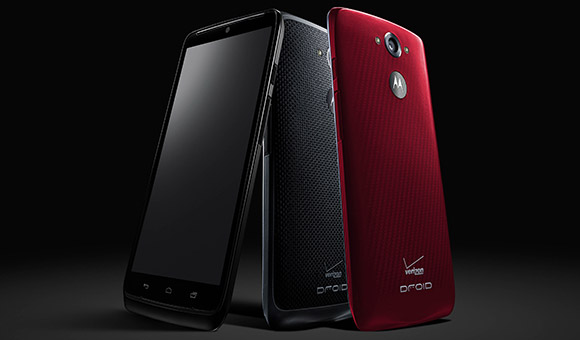
The Motorola Droid Turbo is everything we were hoping for with a 5.2" display of QHD (1,440x2,560px) resolution and massive 565ppi density, a top of the line Snapdragon 805 chip, 3GB of RAM, 21MP main camera. To add a bit of character the Droid Turbo comes in Ballistic nylon or Metalized Glass fiber reinforced with DuPont Kevlar fiber and a water-repellent nano coating.
Think of this as the powerful middle ground between the Moto X (2014) and Nexus 6 - smaller but also much, much bigger. Here are the highlights Droid Turbo's crossbreed specs:

Motorola Droid Turbo is official with 5.2-inch QHD display

At a joint event today, Verizon and Motorola announced the Droid Turbo. The phone runs on the Verizon XLTE network and features a 5.2" Super AMOLED QHD display with a pixel density of 565ppi.
The Droid Turbo is powered by a Snapdragon 805 chipset with a 2.7GHz quad-core Krait 450 CPU, 3GB of RAM and an Adreno 420 GPU. The battery is 3,900mAh and Motorola promises it can last for 48 hours of mixed usage.


The phone also promises to be quite resistant to torturing. It's made either of ballistic nylon or metalized glass fiber reinforced with DuPont kevlar. The display is covered with a protective layer of Gorilla Glass 3 and the innards are covered with a water-repellent nanocoating.
The Droid Turbo with Ballistic nylon measures 73.3 x 143.5 x 8.3mm (at its thinnest), while the Metalized fiber one is a bit thinner at 7.8mm.
At the back of the phone, there's a 21MP snapper with a f/2.0 aperture and 4K video recording at 24fps.
The Motorola Droid Turbo will be available starting October 30 and the 32GB model will be available in Metallic Black, Metallic Red, and Black Ballistic Nylon for $199.99 with new two year contract or $25 per month on Verizon Edge. The 64GB Black Ballistic Nylon model will also be available for $249.99 with new two year activation or $27 per month on Verizon Edge.

HIS iSuppli: Xiaomi outpaces Huawei as 3rd largest manufacturer

The champagne is popping over at Xiaomi headquarters as according to HIS iSuppli, the company is now the third largest phone manufacturer. The analysts reports that Xiaomi outpaced Huawei with a total of 19 million smartphones shipped in Q3 2014. For the same period, Huawei managed to sell 16.8 million smartphones.


Xiaomi's pace has been growing continuously over the past couple of years. In 2012, it sold 5.7 million phones and 18.7 million in 2014 (note that these are full year numbers). This year it sold 11 million and 15.1 million in Q1 and Q2 respectively.
The latest markets to welcome Xiaomi are Singapore, India and Hong Kong. In India, the company has been quite active recently and with its aggressive pricing it managed to not only raise awareness but also sell quite a lot of Mi3 and Redmi Note smartphones.
Competition in China is getting more and more fierce with Huawei, Lenovo and Xiaomi fighting for a better position in the market. Meizu and OnePlus are also potent competitors, which are likely to offer even more competitive products as time goes on.

Wednesday, 22 October 2014

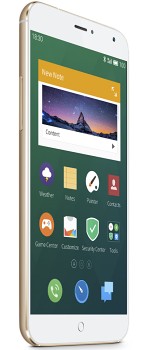
Meizu MX4 gets a gold version, pre-orders start tomorrow


Looking to get an MX4 with a touch of extra bling? Meizu has you covered as the company has just announced a gold version of its latest flagship. The new variant was announced at a Flyme + YunOS presentation held in China today and pre-orders will start tomorrow.
You can book your unit from Taobao, Tmall and through Weibo starting from 10 AM tomorrow morning. Pricing and specifications remain unchanged over the silver version.
Unfortunately, unless you live in China, you chances of getting a gold Meizu MX4 now are pretty slim. There will be just 10,000 units available initially and they will all be distributed in the manufacturer's homeland. We are hoping that by the time Meizu finally expands the availability of the MX4 abroad there will be more units available, though.
Meizu has promised to share more details on the international release of the MX4 shortly - we'll naturally keep you in the loop.

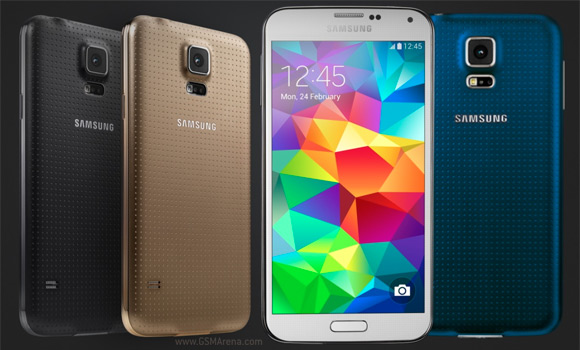
Samsung unveils Galaxy S5 Plus with Snapdragon 805

With a quiet whisper Samsung unveiled the Galaxy S5 Plus – a Snapdragon 805 version of the company's 2014 flagship. This is the small late season upgrade, similar to the Galaxy S4 LTE-A that launched late last year. Just like its predecessor the new Plus model brings a faster LTE connection in addition to the improved performance.
The Galaxy S5 originally launched with the Snapdragon 801 chipset that included a 2.5GHz quad-core processor. The new processor is also at 2.5GHz but it's a new core – Krait 450. The chipset also has a new generation GPU – Adreno 420 – breaking away from the 3xx series.


The other change is LTE Cat. 6, upgrading from Cat. 4. The difference is 300Mbps downloads instead of 150Mbps, the uplink remains at 50Mbps. If you were thinking it, yes, this is the same Snapdragon chipset that the Galaxy Note 4 comes with.
The Samsung Galaxy S5 Plus is otherwise identical to the version that launched early this year. It has a 5.1" 1080p screen and not a QHD screen like the Galaxy S5 LTE-A. There's a 16MP camera with 2160p video (no OIS like the Note), 2GB RAM and 16GB storage, the same 2,800mAh battery too (though the new chipset should be more power efficient). Dimensions and weight remain the same, the IP67 rating too.
Right now the phone is available only in the Netherlands from what we can tell, Samsung's press site doesn't even have a press release for it.

Apple Watch the most anticipated wearable, PwC study finds

PricewaterhouseCoopers has published a study on the smart wearables market, which shows that the Apple Watch is the most hotly anticipated device. 59% of people questioned said they are looking forward to trying the first Apple smartwatch.
A potential smartwatch by Amazon would also enjoy significant interest - 57% of the survey participants would like to see the retail giant come up with its own wearable. Google-powered devices aren't that far behind with 53% interest.


Of course with Android Wear smartwatches already on sale for a few months, chances are plenty of people have already jumped on board and aren't on the waiting list anymore. In fact, according to the study one in five US adults already own a smart wearable of one kind of another, which means that pioneers have been handsomely rewarded for their speed.
However, 33% of those early adopters have abandoned their purchasing device within one year so there's obviously huge potential for improving. 76% of all respondents said that they don't see the smart wearables as a potential replacement for a gadget they already have - instead it should serve to bring new functionality.
There's obviously huge potential in the smart wearable niche at present given the sheer number of large players that aim to participate and the amount of marketing dollars they bring to it. We'll have to wait for at least another year until for things to settle down before we find out who manages to get the largest slice of the pie, though.

Apple now requires iOS developers to use 64-bit code

Ever since Apple unveiled the iPhone 5s, it has been keen to brag about the 64-bit support of the Apple A7 chip. Starting February, it will require developers to develop their apps to work on the 64-bit architecture as well as the 32-bit one.

This means that the company is slowly but surely moving to a 64-bit only support in iOS. There are currently Apple products that are still using 32-bit CPU architecture, so the company is unlikely to require developers make apps using only 64-bit compliant code for at least another year.
In addition, Apple has also launched a Swift mini-site to lure developers to start using its capabilities. Swift is Apple's new programming language for iOS and Mac applications.
Google is also headed in the 64-bit code direction with the launch of Android 5.0 Lollipop. The search giant still doesn't require developers to start making 64-bit compliant applications yet, but we're sure this time will come sooner or later.

Dual-SIM Samsung Galaxy A3 visits the FCC sans 4G LTE

Samsung's upcoming Galaxy A3, A5, and A7 smartphones have so far been leaked a lot. That said, none of them has gotten official yet, so to get information about these handsets we have to look to other sources.
Take the FCC for example. The US certification authority has just given the all clear to the Samsung SM-A300H/DS. According to the FCC documentation, this will be a 3G-only variant of the Galaxy A3, one that will furthermore come with dual-SIM support (hence the "DS" in its model number).


The lack of 4G LTE connectivity means this particular SKU could be targeted at markets where there are little to no LTE deployments. Obviously though, the Galaxy A3 should also become available in at least one 4G-friendly iteration, though that will have a different model number.
Aside from being the smallest of the three A siblings, the Galaxy A3 is also going to be the lowest-end. It's been rumored to come with a 4.52-inch 540x960 touchscreen, an 8 MP rear camera, a 5 MP front-facing snapper, a Qualcomm Snapdragon 410 chipset with a 1.2 GHz quad-core CPU, 1GB of RAM, 8GB of built-in storage, and microSD card support. It should run Android 4.4.4 KitKat from day one.

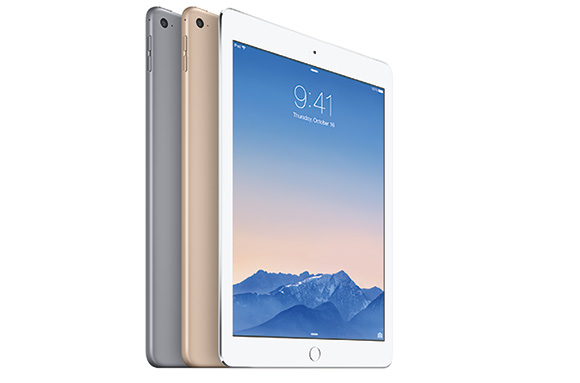
iPad Air 2 benchmark reveals 3-core CPU and 2GB of RAM

Apple iPad Air 2 made a trip to the popular Geekbench benchmark and revealed juicy bits about itself. The freshly announced full-size tablet from Cupertino sports 2GB of RAM and rather curious 3-core CPU.

While 2GB of RAM are hardly a surprise due to a number of leaks that suggested the memory bump, the CPU setup surely is a curious one. Past iPad models have stuck to a dual-core CPU.
The Geekbench score is quite impressive too - it clearly indicates that the iPad Air 2 is quite a performer. We will reserve final judgements for our full review, but, at a quick glance, the 4477 score is the highest we’ve seen.
Doubling the RAM in the iPad Air 2 is likely a step to accommodate the previously rumored split-screen multitasking. The latter is expected to appear on the slate via a future update.